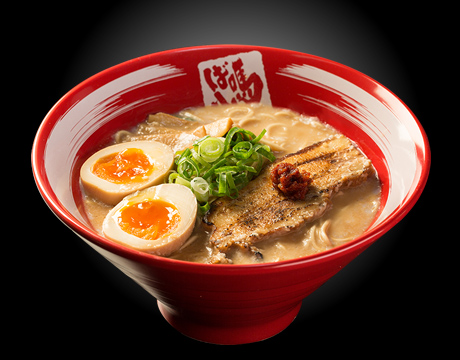
From Nagano to Mongolia (Ulaanbaatar), and then to France (Paris)
“Takesan,” the Paris ramen shop that remains incredibly popular even a year after opening
I visited “Takesan” in Paris, which opened in May 2024, for the first time in a year, accompanied by the owner of the franchise headquarters.
Paris is the second country where we’ve opened a location, following Ulaanbaatar.
Although we can track sales figures from Japan, the main purposes of this visit were to assess the on-site situation, check ramen quality, create marketing content, and scout locations for a second store.
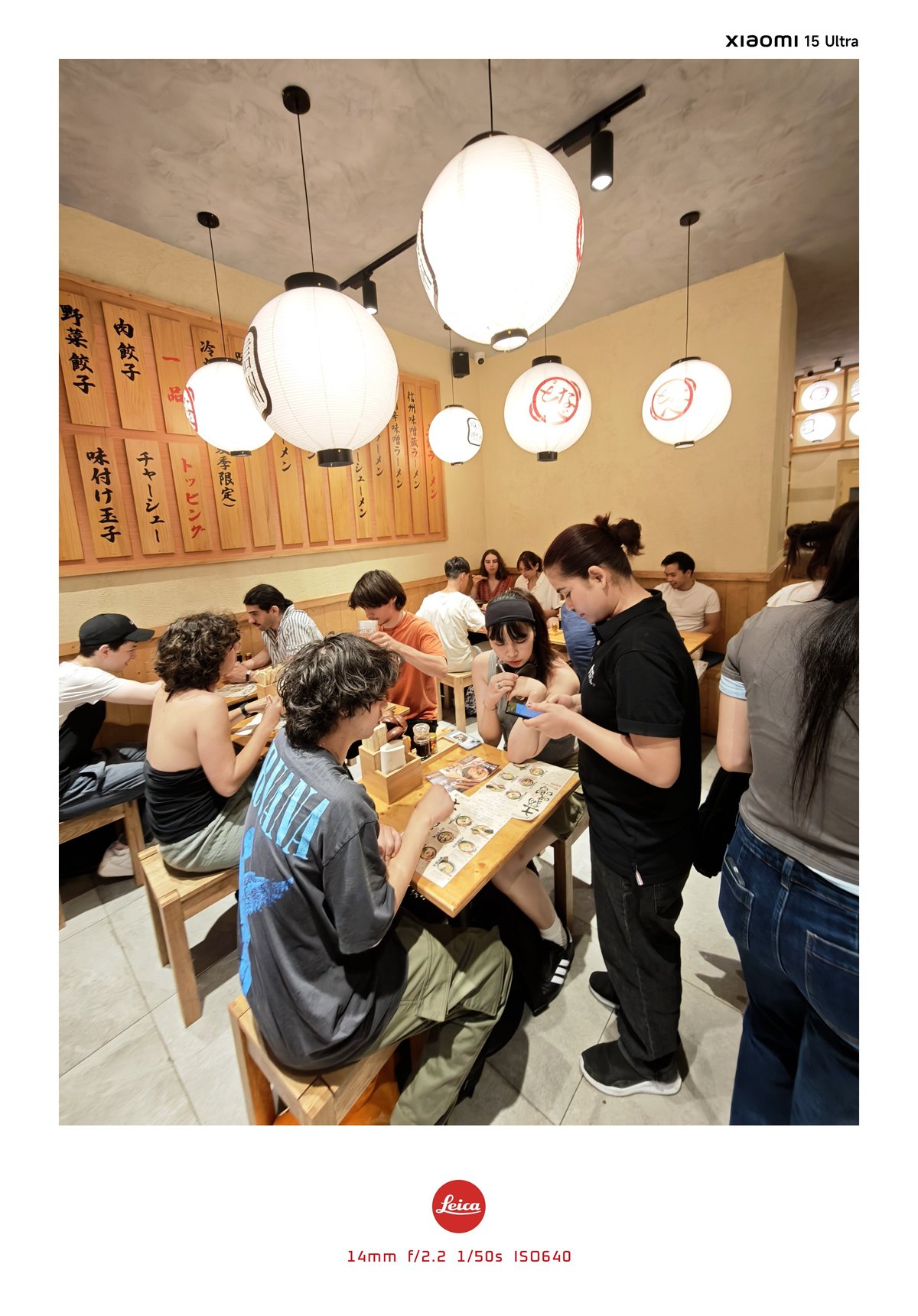
Ramen bowls priced at 18 euros (3,100 yen) are flying off the shelves. Although it is a small shop with about 40 seats, it attracts over 400 customers on weekends.
I cannot go into the specific details of the factors behind its success, but I believe it is largely due not only to the location and pricing but also to the uniqueness of this ramen and its cultural narrative.
These are the very points that the Paris franchise owner kept emphasizing during his inspection visit to Japan.
France, the culinary capital of the world. It’s a major agricultural powerhouse. Ingredients, sauces, and attention to detail are what matter most. Fast-food chains from the U.S., like McDonald’s and Starbucks, have certainly established themselves now, but when I first came to Paris 40 years ago, places like McDonald’s weren’t popular at all. It’s hard to find a story or culture behind fast-food chains.
It was the young people of Paris who embraced fast food. When you think of Paris, you think of cafés. In Paris, coffee shops and cafés are distinct business models.
Traditional Parisian cafés are places to enjoy the atmosphere. Coffee shops like Starbucks are places to kill time. Whether the coffee tastes good or not is largely irrelevant in both cases.
“Takesan” has both culture and a story.
We decided to partner with this company for its overseas expansion because of its authentic product lineup and the founding owner’s flair as a ramen creator who adapts on the fly.
Our internal project to bring miso ramen to the world kicked off around 2017.
With the naive assumption that “when you think of miso ramen, you think of Sapporo,” I landed in Sapporo and personally
visited eight famous shops a day for two days straight. In the end, I didn’t find what I was looking for.
While miso ramen is famous in Sapporo, it isn’t a city known for producing miso. There wasn’t a single ramen shop where the miso truly stood out.
↓ Takesan, Paris Store


When it comes to miso-making, Nagano is the place to go. I focused my search on Nagano, and that’s how I connected with “Takesan.”
The miso really stands out. They even made me a vegan miso ramen that uses no animal products.
Stories like this are absolutely essential for expanding overseas. They’re also necessary for building a customer base and a fan base to ensure long-term success abroad.
Without culture or a story, the only reason people fall in love with a product is the taste.
But even if you fall in love with the taste, you’ll eventually get tired of it.
The more often you eat it, the faster you’ll get tired of it.
https://www.youtube.com/watch?v=SPo0spLxf3k
Starting around the 29:36 mark. That Parisian really knows her stuff.☺️
There are two typical scenarios when foreign companies approach us expressing a desire to expand their business into Japan.
・They want to launch a well-known brand (e.g., XX) in their home country.
・They want to launch a Japan-related food business and would like to discuss it with us.
Looking back now, I realize that the success of our long-standing partnerships is almost entirely due to the latter approach.
Our company has been involved in the Japanese food and franchise industries for over 35 years.
Whenever we receive an inquiry, I personally visit the city in question to assess the market and evaluate potential locations, carefully considering which business model is most likely to succeed in that country and city.
Our approach is to decide on business ventures in consultation with our overseas partners.
Since we are not a franchise headquarters, we do not impose specific business models or push sales.
Our stance is to work together to select the best business for the success of our franchise partners.
In Takesan’s case, a major factor in its success is that there had never been authentic miso ramen in Paris before.
There is also a compelling story behind the fact that a miso shop in Obuse, Nagano—which has been in business for 245 years—makes a special miso for Takesan in wooden barrels.
Miso, a fermented food, is very well-received by health-conscious Parisians.
Nagano, in Japan, is the home of miso, and while there are many variations of ramen broth, the core foundation is “miso.”
We are currently planning to expand primarily within the EU, with discussions underway in Poland, the UK, post-reconstruction Ukraine, and Romania.
We aim to expand this business within the EU, where there is a deep respect for food, culture, and storytelling.
Ramen in Switzerland?
While on a business trip, I also made a side trip to Geneva and Zurich in Switzerland.
That’s because I knew it was the country where people are willing to pay the highest prices for ramen in the world.
Geneva
I visited two shops, including one owned by a Japanese. One was closed for the day...
First shop: A shop owned by a local
My first ramen in Switzerland...
The taste was...


Second Location
Japanese-owned
The food was good, but just like in Paris, the restaurant in Switzerland didn't have air conditioning.
The day I went, Paris was experiencing extreme heat with temperatures reaching 42°C...
I was drenched in sweat while eating ramen.


Zurich
I visited two restaurants, including one owned by a Japanese proprietor.
First restaurant
There was a restaurant that’s part of a four-location chain. It seemed to be the most popular one.
The flavor was solid, and the interior was strikingly similar to a certain ramen chain in Madrid.


Second Location
A ramen shop that just opened. Paying in advance is fine, but they asked me what percentage I wanted to tip... I mean, I haven't even eaten yet, and I haven't received any service...
Apparently, there's a rule that you have to order at least one drink...


In short, in Switzerland,
a meal of ramen, gyoza, and water for one person costs over 8,000 yen.
Although cities and shops vary, the median price for a bowl of ramen in Switzerland is
25–27 Swiss francs, or 4,600–5,000 yen.
This reality might seem unbelievable to Japanese customers or Japanese ramen shop owners, but ramen shops are booming everywhere in Switzerland.
Apparently, Machida Shoten opened a branch in Zurich just one week after I visited.
I think the future of the EU ramen market is going to be incredibly interesting.
United Kingdom
Opening in Edinburgh.
This is the first EU location for “Bariuma” ramen from Hiroshima, a company I’ve been supporting in its overseas expansion for about 15 years now.
It’s located on the ground floor of a former Mexican restaurant. Just 300 meters from the famous Edinburgh Castle, it attracts many tourists, and curry is a popular menu item alongside ramen.
Since this was a city without any authentic ramen shops, I’m looking forward to seeing how things develop from here.
Expansion to other cities is also in the works.
Our company has a good grasp of the ramen scene in the following EU regions.
These are the target areas for future expansion.
Germany
Berlin
Düsseldorf
Spain
Madrid
Barcelona
Valencia
Portugal
Lisbon
Porto
United Kingdom
London
Manchester
Netherlands
Amsterdam
Rotterdam
Austria
Vienna
Ukraine
Kyiv
Hungary
Budapest
Czech Republic
Prague
Romania
Bucharest
AssentiaHoldings Pte.Ltd.
AKIRA TSUCHIYA