What if Japan were a time machine to the future for African countries?
Long ago, there was a term called “Time Machine Management”—a phrase coined by SoftBank’s Masayoshi Son.
For Japan, the United States is a time machine to the future.
Events and business trends that emerge in the U.S. reach Japan two to three years later.
Therefore, by observing the U.S., one can essentially predict Japan’s near future. Using this theory, Son imported many businesses—starting with Yahoo—from the U.S. to Japan.
Nowadays, the United States is no longer two or three years ahead of Japan.
With the internet, social media, and AI flooding the world to this extent, perhaps the United States and the rest of the world are only about tomorrow ahead of Japan?
However, it remains a future beyond the present, and the fact that it serves as a “time machine” remains true.
Turning our attention back to Africa, is Japan a “distant future” for African nations?
Our company accepts many interns from Africa.
This is the ABE Initiative, a program launched by the late Prime Minister Abe to bring young Africans to Japan to study.
If China is influencing Africa through money and infrastructure, Japan will influence it by developing industrial talent. The program aims to have young Africans study in Japan for two years to earn a master’s degree, then return to their home countries to serve as bridges between Japan and their nations in business and culture.
It is a wonderful program.
Every year, our company accepts African students from this program as interns.
On July 1, 2023—about three years ago—one such student applied to our company.
His name is Sergio Morais.
He had thoroughly researched our company. He wanted to bring a franchise business back to his home country.
During his two years studying in Japan, he was exposed to various aspects of Japanese culture and observed businesses, and he identified something he wanted to launch in his own country. It seems to be a business that doesn’t yet exist in his home country.
A laundromat franchise.
He says that in his country, laundry is done by hand, and washing a family of four’s laundry takes four to five hours.
This work falls entirely on women.
The girls in his class have no time to study.
He wants to open doors to new opportunities for them.
For Japanese people, laundry is a routine task and part of household chores.
Nowadays, you can do laundry with the push of a button.
He also says that laundry is a health industry.
Akira, can you imagine wearing the same clothes and underwear for three or four days straight?
It’s uncomfortable and unhygienic.
That’s why laundry is a health industry—a business dedicated to physical and mental hygiene.
Well… those words were a real shock.
It was a perspective I had never even considered.
After completing a six-month internship at our company, he is now an entrepreneur running two coin laundry franchise locations in his home country of Mozambique, Africa.
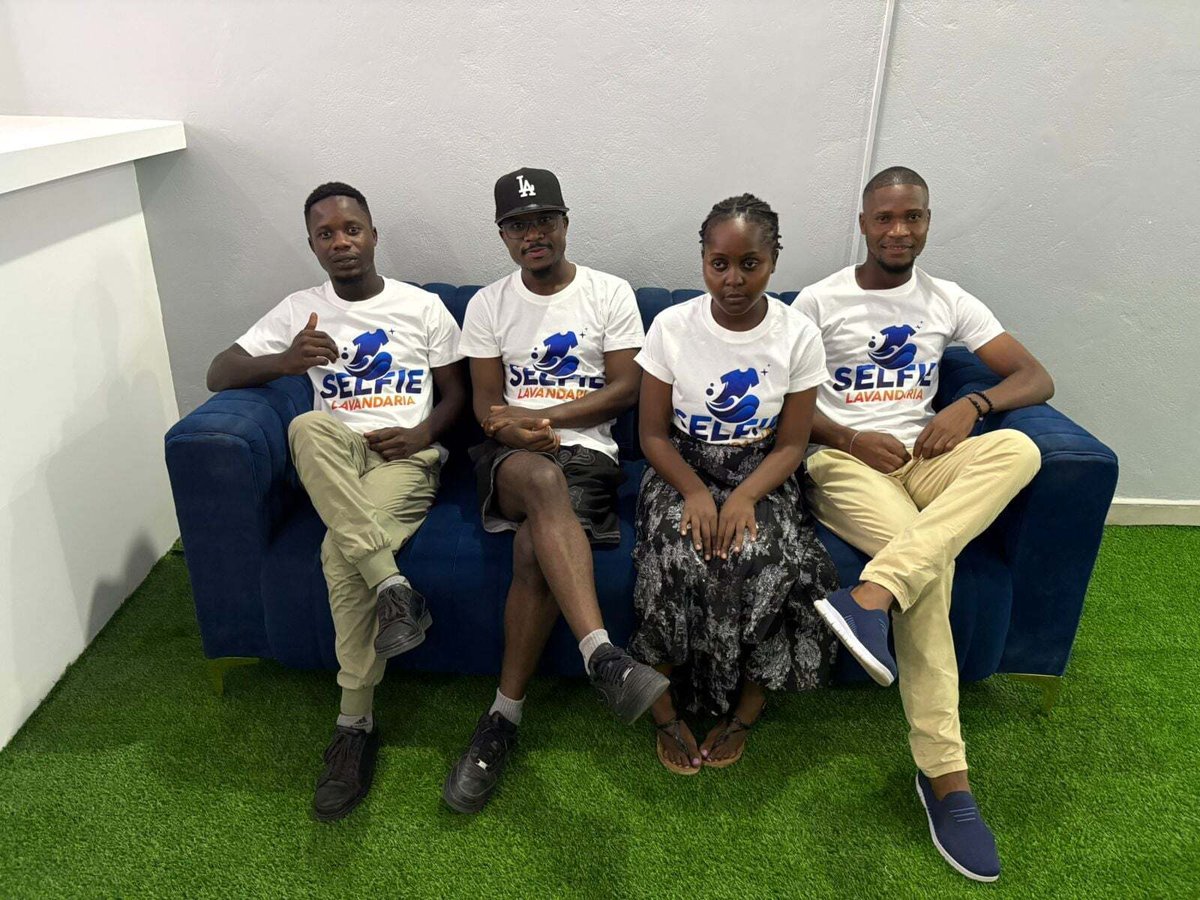
Selfie Laundromat!
We established the Japanese franchise headquarters jointly with a company in Nagano Prefecture, and he is a franchisee.
He is expanding the coin laundry business overseas with a completely different set of values than when we operated it in Japan.
He now has three locations in Kenya and plans to launch in the Republic of Liberia and the Republic of Gabon by the end of 2026.
When he opened his second store in Mozambique, he sent us the following message.
I was so moved by it that I would like to share it here exactly as it was written (in English, with a translation).
There are 54 countries in Africa.
Economic conditions and circumstances vary widely from country to country. How far this business will expand
depends on how deeply his original philosophy, his passion, and his core belief—what he wants to achieve in Africa through this business—take root.
Let’s go!!!


A Letter from Sergio
Looking at this photo reminds us how meaningful this journey has been. When I first began discussing the idea of introducing a self-service laundromat in Mozambique with Assentia Holdings, it was only a vision. In late October 2024, we were already preparing to open Store 1 and launch the laundry service, but the journey was not simple. Mozambique experienced a period of political unrest, which created uncertainty and delays for many businesses. Because of this situation, we had to postpone our plans, and we were only able to officially open the store in February 2025.
During the early days, we faced another important challenge: the concept itself was completely new to most people. Many customers had never heard of a self-service laundromat before. At the beginning, people were confused and sometimes even reluctant to try it. Some did not trust the technology. Others did not understand why they should operate the machine themselves if they were paying for the service. In our culture, laundry services are usually done by someone else, so the idea that customers should open the machines, place their clothes inside, start the washing process, and later move them to the dryers was unfamiliar.
There were also cultural challenges and a natural hesitation toward something new. Many customers preferred to observe first rather than try it immediately. Some asked many questions, and others watched how the machines worked before deciding to use them. In the beginning, building trust required patience, explanations, demonstrations, and the constant presence of our team.
However, with time, people slowly began to understand the value of the system. As customers experienced the speed, convenience, and cleanliness of the service, their confidence grew. They realized that self-service allows them to wash larger quantities of clothes quickly, with reliable machines, and in a clean environment. Today we see more and more people returning regularly, and many customers even recommend the laundromat to their friends and family.
From the beginning, my expectation was that this project could do more than simply provide a laundry service. I believed it could introduce a new lifestyle, improve hygiene, and make daily life easier for many people. Most importantly, it could promote independence and reduce the time spent on traditional laundry practices. In many African households, domestic chores are largely carried out by women, who often have to balance these responsibilities with caring for their children and managing other household duties. As a result, they frequently have very little time to pursue other meaningful activities such as education, personal development, or income-generating opportunities.
Self-service laundromats can help address this challenge by saving time and simplifying the laundry process. For example, instead of spending hours washing clothes by hand, customers can complete the task efficiently while using the waiting time for other activities—such as reading, studying, or simply resting. In this way, the service is not only about washing clothes but also about empowering individuals and improving quality of life. In many parts of Africa, access to modern laundry services remains limited, so this initiative has the potential to contribute to better cleanliness, health, dignity, and greater personal freedom within our communities.
The opening of Store 2 represents another important step forward. It shows that the concept is gradually being accepted and that the effort we have invested together with the Japan team is beginning to bear fruit. I feel even more determined to continue developing this model so that more communities can benefit from it in the future. For example, we have also opened three stores in Kenya—one in Kiambu and two others in Madaraka and Kayole Junction.
Mr. Tateichi from Tateichi Corporation, as well as Mr. Nobu and Mr. Akira from Assentia Holdings, have been key figures in this project. Without them, we would never have reached this point. The entire Japan team believed in this vision from the very beginning. Their patience, understanding, and continued support have been extremely important throughout this journey. Many times, they went beyond what could normally be expected to ensure that this project could succeed.
Their commitment is not only helping to build a business, but also helping to improve hygiene, cleanliness, and quality of life for people in Africa. On several occasions, they went out of their way to make sure that this project succeeds. They have traveled many times to Africa to provide support, offered financial assistance, and provided training and valuable advice. In many ways, they are the heart of this project.
Personally, I feel very honored to be part of this collaboration between Japan and Africa. I hope that together we can continue to grow this project and make it a strong example of how international cooperation can bring innovation and positive change to our communities.
Sergio Elidio Morais